
History and landscape
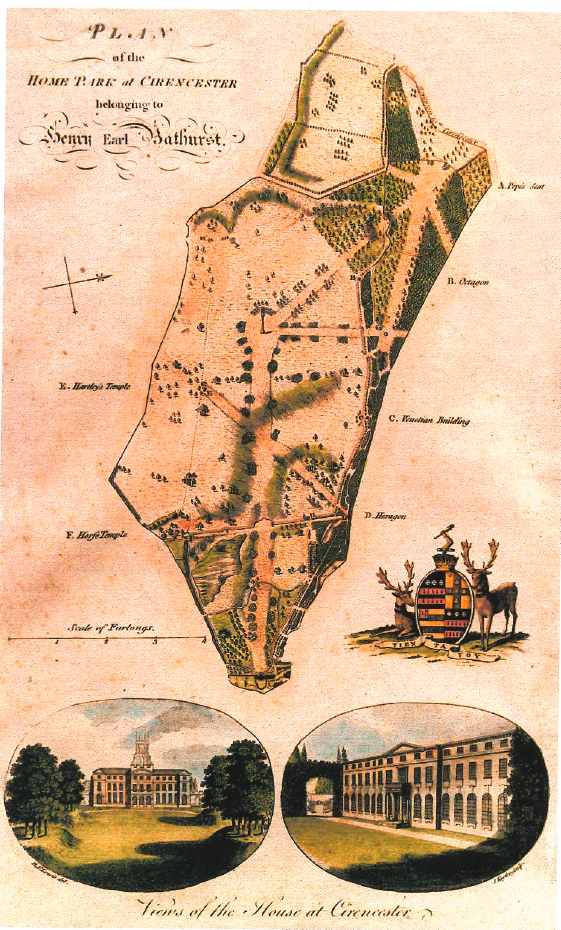
In 1695, Sir Benjamin Bathurst purchased the current estate, known then as Oakley Grove, for his eldest son Allen Bathurst who became the 1st Earl Bathurst. Allen Bathurst renovated the house on the site of Oakley Grove (now known locally as The Mansion) and set to work transforming the surrounding land. His objective was to create a striking landscape underpinned by economic viability through timber and agricultural produce; this is still relevant today.
From 1712, Cirencester Park was landscaped by the 1st Earl with guidance from prominent 18th-century poet Alexander Pope, an eminent literary wit of his time and a passionate gardener. Pope’s influence and ideas kept him at the forefront of changing fashions in garden design. This plays out in Cirencester Park where a formal approach of far-reaching avenues culminating in viewpoints, as inspired by Continental and classical gardens, combines with the more naturalistic inclusion of irregular shaped woods, copses and paths.
The 1st Earl was also an early proponent of the Gothic Revival style, evident in Cirencester Park’s various follies and buildings. The Park sits on a bedrock of largely Jurassic oolitic limestone of the Cotswold range; it is mainly wooded with many mature beech, including the renowned Bathurst Beech seed stands, as well as other deciduous and coniferous species. The 1st Earl was careful in his choice of tree species to be planted, a legacy alive to this day and demonstrated in the Jubilee Cherry Walk and Jubilee Community Arboretum, planted in 2022 and 2023 with a mix of parkland species including broadleaved and conifer trees and shrubs.
Cirencester Park’s impressive network of avenues emanate from a central Broad Avenue that runs the length of the Park from Cirencester to the village of Sapperton; this is a distance of approximately six miles. It is estimated that there were originally 240 Horse Chestnuts planted 10 yards apart along the Avenue, thought to have been planted to commemorate the Battle of Waterloo in 1815. Today, many of the trees have reached the end of their natural life (some 200 years); you will see that new Small Leaved Lime Trees, an indigenous British species, have been planted in their place as part of a restoration project.
Tracing our storied past
A home with added history
BLOOMING BONDS
Bathurst and Alexander Pope, a leading figure in London gardening and architectural circles, became collaborators and together they planned the creation of a sublime landscaped park. In 1716 Lord Bathurst purchased further land comprising the Oakley and Sapperton estates; these were linked together by a series of parks joined by one long avenue known as The Broad Avenue. Lord Bathurst was a great believer in seasonal colour, something that is standard in gardening design today, but was rare in the 18th century. He spent a great deal of time and trouble choosing the species of trees to be planted and it is thanks to his extraordinary foresight that the park still boasts some of the most stunning vistas in England.
THE MANSION
The Mansion was built by the 1st Earl on the foundations of an original Tudor-Jacobean house belonging to the Danvers family. It may also be built on the same site as the original Cirencester castle built around 1107 and destroyed by King Stephen in 1142. The Mansion sits within the town of Cirencester, screened from it by the tallest yew hedge in the world. At over 45ft, this remarkable feature has been much recorded in local and international history, especially when it comes to its annual trim – a job that takes two men two weeks to complete.
Book a tour of The Mansion here.
ANCIENT MONUMENTS
Lord Bathurst's interest in the Gothic Revival took physical evidence when he built a small faux-ruin folly called Alfred’s Hall within the Park in 1721. In 1730, Sapperton Manor was demolished parts of it were integrated into Alfred's Hall; doorways, windows, battlements, and sculpture helped recast the faux ruin with a Gothic flavour believed to be the earliest of its style in England. Alfred's Hall is currently undergoing a gentle programme of stabilisation and is not open to visitors; it was just one of the many follies installed by the Earl and it is possible to see some of these while enjoying a visit to Cirencester Park.
Enjoy a walk to see the Park follies and monuments: Follies & Vistas Walk
A PLACE IN MODERN HISTORY
The Bathurst Estate has seen many changes over the years, most notably during the Second World War when it was an essential tool for the war effort on many levels. Timber was used, even to help build some of the planes for the RAF, and much of the woodland was cut down. A large area by Queen Anne's Monument was for vehicle manouevres as well as an Army hospital for American troops. The first patients were D-Day casualties, and 11,239 patients were cared for there. The last patient was discharged in July 1945.
Under the present Earl Bathurst, this part of parkland is being gradually restored to its original state.
Present day

CECILy HIll: The PERFECT PLACE TO SETTLE
The Grade II Cecily Hill Gates are a striking entry point to Cirencester Park; this area has long been a favourite place to settle. Following the Roman invasion of Britain in 43AD, the town of Corinium became a bustling centre, second only to London in size and importance. An impressive villa was discovered nearby. In 577AD, Cecily Hill was a Saxon settlement. In 1857 the site became home to The Barracks, a military armoury that still cuts a mighty profile today.
QUEEN ANNE AT CIRENCESTER PARK
In 1702, Queen Anne, the last Stuart monarch, visited Cirencester Park on her way to Bath. She was hosted by the newly-wed Allen Bathurst and his wife Catherine. Shortly after, Allen Bathurst received the title Baron Bathurst of Battlesden, Bedfordshire. After the Queen's death in 1714, Allen Bathurst retired to Cirencester and began rebuilding the house and planning the Park. In 1741, the 1st Earl Bathurst erected the Queen Anne's Monument to her memory. The monument is an impressive 50ft tall and is visible from several vista points.

Follies and vistas
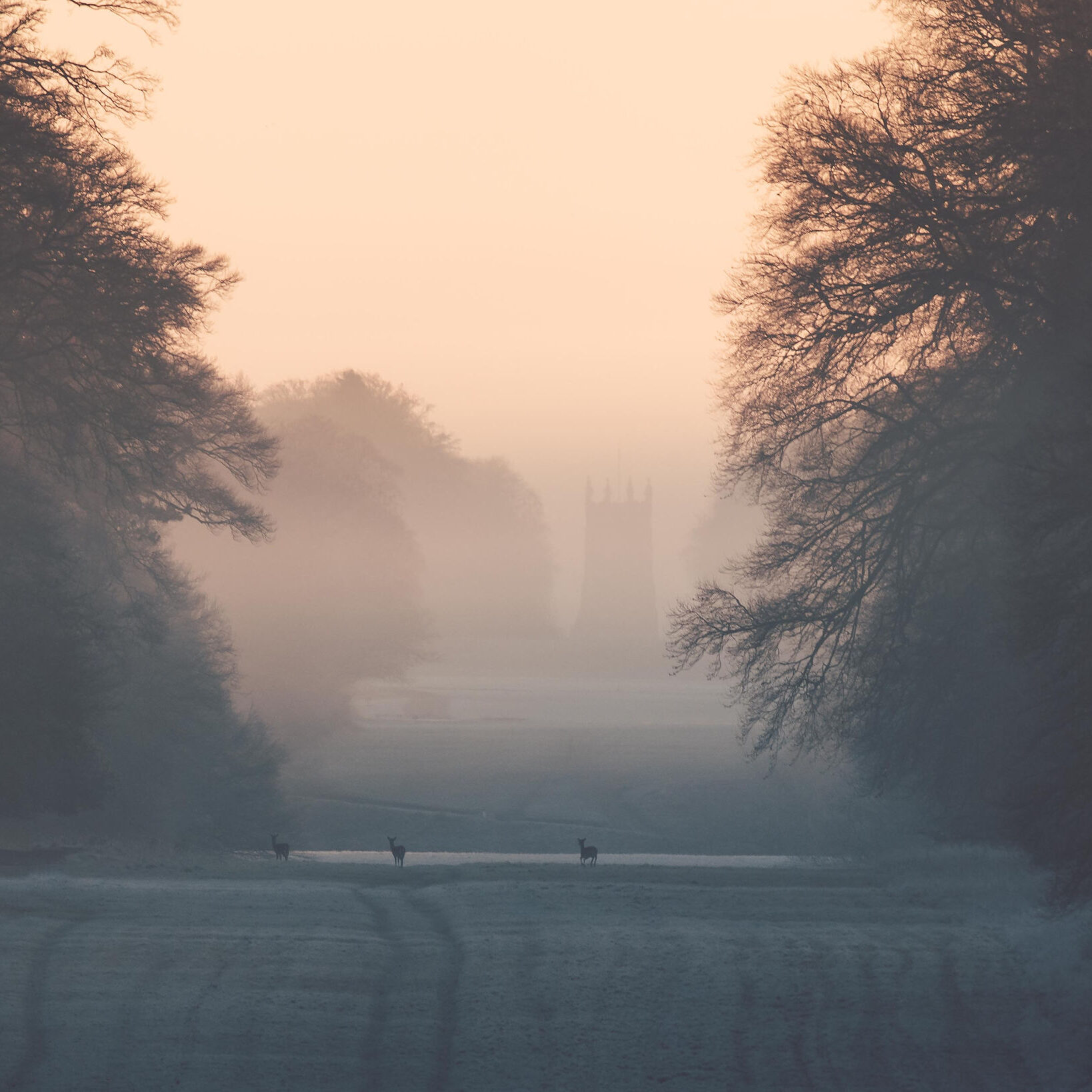
Explore Cirencester Park, its follies and vistas by using our Interactive Map.