
Two young oak trees have been planted at the Queen Anne Monument in Cirencester Park as a living tribute to the 80th anniversary of the end of the Second World War – a quiet, enduring symbol of remembrance rooted in a landscape that played a significant role during the conflict.
During the Second World War, Cirencester Park served as the site of two U.S. Army field hospitals, the 188th and 192nd General Hospitals which were built within the vicinity of the Queen Anne monument. These facilities treated wounded Allied servicemen and women, transforming the tranquil, centuries‑old landscape into a centre of urgent medical care and recovery.

The Park’s woodland resources were also drawn into service, as much of the estate’s timber was felled to support the war effort. Despite the large‑scale felling, deliberate efforts were made to preserve the park’s historic avenues, ensuring that some of its defining landscape features survived the pressures of wartime necessity.
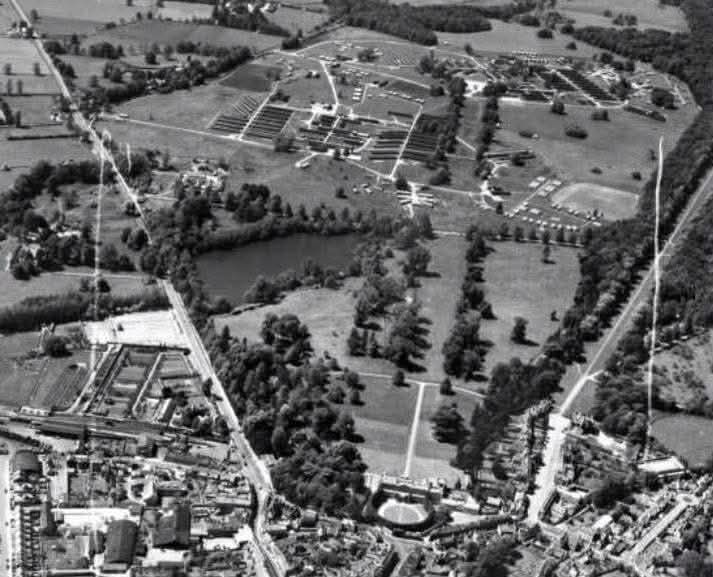
Cirencester Park’s wartime story also includes moments of extraordinary morale‑boosting: in July 1944, Glenn Miller and his band performed to an audience of 7,000 troops, filling the grounds with music and dancing.
Veterans’ Oaks Initiative
The newly planted oak trees place Cirencester within a wider national movement: the Veterans’ Oaks initiative, a UK‑wide community project marking 80 years since the end of WWII by encouraging individuals, families, and organisations to plant oak trees as living memorials. The initiative celebrates the courage and sacrifice of the wartime generation while also promoting environmental stewardship, biodiversity, and a greener future for generations to come.

In time, the oak trees planted at the Queen Anne Monument will mature into part of the park’s living archive—quiet yet eloquent markers of a period that shaped lives, landscapes, and histories. Together, the trees stand as a bridge between past and future, honouring Cirencester’s rich wartime history while planting hope for generations to come.